O‘ahu Homeschool Science Series

O‘ahu Homeschool Science Series

2131 Makiki Heights Drive, Honolulu |  808.955.0100 x126 |  Homeschool@HawaiiNatureCenter.og

Hawai‘i Nature Center offers an on-campus science series in which every class builds upon each experiential lesson. Created to bring together homeschool students, ages 6 to 11, the weekly 6-hour sessions on Wednesdays are live, in-person and teacher-led. It includes learning in the Makiki rainforest as well as field trips. Topics include: animal lifecycles, freshwater ecosystems, food webs, sound, electricity, colors in nature, invasive species, volcanism and more.

Download the Fall 2026 Course Outline

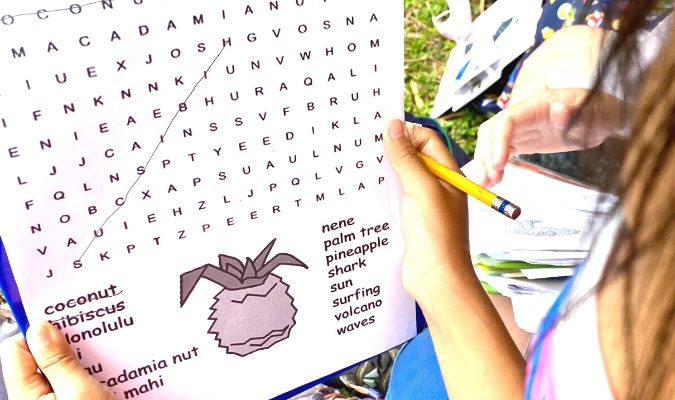
  • A young girl solving a crossword puzzle
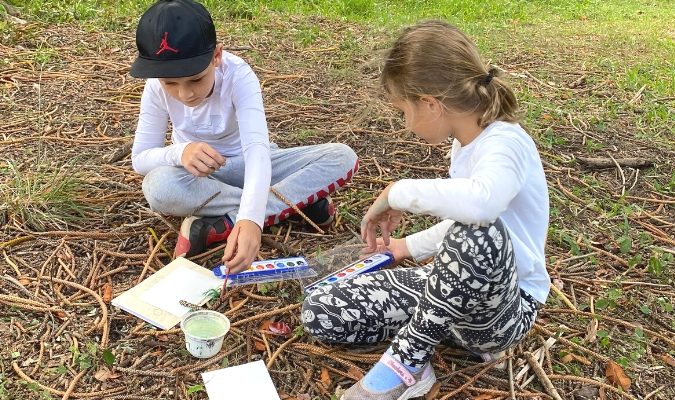
  • A young girl and boy working on their watercolor painting outdoors

Fall 2026 Homeschool Science Series | August 26 - December 9 | For Ages 6 to 11

2026: August 26 – December 9 | Weekly on Wednesdays from 8:30 am (drop-off as early as 8:15 am) to 2:30 pm
Full Semester: $1,200 + fees (covers all 14 weekly classes) | Individual weekly classes are not available

Raindrops to Reef

Join the Hawaiʻi Nature Center’s Homeschool Science Series as we explore the ecosystems and ecology of Hawaiʻi’s watersheds. This semester-long program will take our cohort of homeschool students through the regions of the ahupuaʻa: ʻuka, kula, and kai. Each unit will delve into their respective region’s unique habitats, native flora and fauna, and the interdependence of our living and non-living systems to support a healthy environment. Our journey through the ahupuaʻa will include field trips and collaborations with local experts, deepening our understanding and appreciation of each region and contextualizing our learning within their cultural and ecological significance. Students will learn to practice the scientific method with an emphasis on the observation and identification of natural phenomenon through HNC’s hands-on, experiential approach. Here, keiki lead with curiosity and reinforce learning through crafts, games, hiking, and fishing in the stream while practicing teamwork, making friends, and having fun.

Open for enrollment now. When program is full, contact Homeschool@HawaiiNatureCenter.org to be wait-listed and include the number of children you wish to enroll, their ages, and your best contact phone number.  No program held on October 7 due to Nature Adventure Camp & November 11 due to Veternas Day (HNC closed). Field Trips do not include swimming and may require families to meet at the field trip site due to limited access and funding for buses. More info shared with families prior to and during the course. 


Fall 2026 Lessons Overview

August 26 – December 9

water drop icon
August 26: Intro
We’ll meet and learn about our ahupua‘a, Makiki Valley, and the Hawai‘i Nature Center. It will be a day of introductions, fun activities, and new encounters.
Parrot icon
September 2 to 23: Unit 1: ʻUka
Like raindrops on the trade winds, we begin our watershed journey high in the mountains. We’ll ask why this habitat gets so wet, what makes the forests here flourish, and how these spaces have become refugia for so many native species. Home to ʻiʻiwi, kāhuli snails, mountain naupaka, and so much more, these plants, animals and humans alike depend on a healthy ʻuka region to survive and thrive. Let’s learn how we can restore and protect this vital part of our watershed.
pollen icon
September 30 to October 28: Unit 2: Kula
As we move downstream, we’ll find the kula region, filled with wetlands, farms, human habitat and modern infrastructure. This region has experienced many changes, but wildlife finds a way. We’ll discuss the habitats and animals native to the kula, traditional farming methods that work in symbiosis with this environment, and all the important ways this region helps people and the planet.
tree icon
November 4 to December 2: Unit 3: Kai
Finally, we reach the sea. Our coastal ecosystems host amazing biodiversity from naupaka-lined shores to reefs teaming with aquatic life. They are also the first habitats that humans settled when reaching our islands. We’ll dive into the amazing fish, seabirds, and marine mammals that call this region home, how humans depend on healthy coastal ecosystems, the impact our presence has had, and the ways we can
help protect it.
earth icon
December 9: Outro
We will discuss solutions to challenges facing our planet, as well as review and celebrate the places we visited and people we met. We will choose exciting activities to do and present what we have learned to our ‘ohana. It will be a day of learning, but also a day of fun.

Fall 2025 Lessons Overview

2025: September 3 – December 10. No classes on October 8 due to Nature Adventure Camp held during school breaks and is open to students, ages 6 to 11.

Waves icon
September 3: Welcome to Makiki Valley
We start our semester by coming together and grounding ourselves in Makiki Valley by getting to know the spaces and places we’ll be learning from this fall. As we start to map our way throughout the nature center and the valley, we will begin building our cohort community and observation skills through movement-based games and exploration.
September 10: Explore Oceania
Unit 1: Oceanic Connections |begins with the study of and the “3 W’s” of Dispersal.” Wind, waves and wings move people, plants and animals across islands. Connect distant places to our home and classroom as student become acquainted and start their unit project on the scientific method through water quality testing of the stream.
September 17: Wild Wings of Oceania
Feathers, flight, and migration will shape our journey as we learn about birds such as the Albatross and others whose flights take them throughout Oceania. Join us as we learn how birds act as travelers, storytellers, and seed-spreaders across the sea.
September 24: Wayfinding
Chart a course through traditional Polynesian navigation and see how the stars, currents, winds, and seabirds guide voyagers. We’ll peek into how the long journeys across Oceania have shaped culture, community, and life across time.
Parrot icon
October 1: Looking Out for the Small and Leafy Things: A Close-Up with Leafy Sea Dragons
We’re zooming in on the delicate and fantastical world of leafy sea dragons as we celebrate camouflage, biodiversity, and life in miniature. This week we appreciate the small and often overlooked parts of our world, especially in the ocean, that play a big role in healthy ecosystems.
October 15: Sustainable Food Systems in Hawaiʻi – Past to Present
Unit 2: Mālama ʻĀina begins with the study of ancient fishponds to modern farms. Learn how the ʻĀina (land) nourished people through place-based food systems for thousands of years. Students learn how land feeds both the body and community. Unit project on compost.
October 22: What’s a Loʻi?
We’ll introduce the world of loʻi kalo (taro patches), where traditional farming meets ecosystem stewardship. The group will learn how water, plants, and people work together in these living systems of aloha ʻāina. We may even get the chance to see our local loʻi kalo.
October 29: Compost at Full Circle Farms in Waimānalo
Our field trip this unit will take us to Full Circle Farms in beautiful Waimānalo to see how modern farming and large-scale composting happens right here on the island. This field trip may take place during Week 6 or 7 and may be to a different farm depending on availability.
sun icon
November 5: Zero Waste
We’re thinking about the waste we create and how to reduce our impact and practice sustainable habits. It’s time to reflect on what we’ve learned about compost and sustainability, both in the past and present throughout this unit.
November 12: Climate Change – What, When, Where, Why, How
Unit 3: Contemporary Challenges begins on climate change, why it’s happening, what it looks like, and of course what we can do both as individuals and communities.
November 19: Sea Level Rise
Our knowledge of climate change will lead us as we learn how sea level rise is shaping how coasts, creatures, and communities are adapting to a changing world. This week connects real-world science with hopeful stories of resilience.
November 26: Ocean Acidification
Join us as we dive into another symptom of climate change: ocean acidification. Through hands-on investigations, they’ll explore how a shifting sea affects life along the coastlines and beneath the waves. This week takes us into our unit experiment on the impact of acidification on shells building creatures.
earth icon
December 3: Invasive Species – Aquatic Species in Hawaiʻi and Beyond
Invasive species are a common topic on this island, but this time we’re focusing on what’s happening in the water. Our exploration takes us to the invasives threatening our nearshore habitats and the champions fighting these changes.
December 10: Hope for the Future – Final Week of the Semester
For the final week of the semester, we reflect, celebrate, and imagine a future filled with thriving ecosystems and hopeful, empowered stewards leading the way! This week wraps our journey with joy, gratitude, and a look ahead to the positive change we can all create. Join us at the end of our final day to celebrate and share memories of our new friends from the semester.

Fall 2024 O‘ahu Homeschool Science Series | For Ages 6 to 11

This semester is sold out.
September 4 – December 11, 2024 | Weekly on Wednesdays from 8:30 am (drop-off as early as 8:15 am) to 2:30 pm
Full Semester: $1,200 (all 14 weekly classes) | Individual weekly classes are not available for purchase
No class will be held on October 9 due to Fall Nature Adventure Camp.

If sold out, please contact Homeschool@HawaiiNatureCenter.org to be wait-listed for the series. Include the number of children you wish to enroll, their ages, and your best contact phone number.

This semester is sold out.

Gear Up & Get Ready

  • Eat a hearty breakfast.
  • Wear clothes and closed-toe (hiking or athletic) shoes that can get wet and dirty.
  • Put on mosquito repellent and sunscreen at home.
  • Leave anything expensive, valuable, or fragile at home.

What to Pack Daily

  • Small backpack
  • Water bottle
  • Morning snacks and a big lunch (no refrigeration)
  • Extra change of clothes, raincoat/poncho and water shoes
  • Sunscreen, hat, and sunglasses
  • Swimsuit and towel
  • COVID facemasks (optional)

REFUND & CANCELLATION POLICY – SEMESTER  If enrollment is canceled 7 days or more prior to the program’s start, you will receive a refund less a $100 cancellation fee per child and associated administrative-processing fees. If enrollment is canceled within 7 days of the program’s start or up to 6 weeks after the program has begun, Hawai`i Nature Center will refund 50% of the program fee per child. HNC memberships purchased during enrollment will not be refunded. There are no refunds after the end of the sixth week of the program. No refunds or makeups for individual classes missed.

THIRD-PARTY REGISTRATION POLICY  Hawai`i Nature Center does not accept third-party registration or registration on behalf of other friends or family. The registering child’s parent or guardian must be the individual to complete and submit all registration information. If we determine that a third party has completed your child’s registration, registration will be cancelled and we will refund your tuition. A $50 cancellation fee per child per week and administrative-processing fees will be charged.

tree icon
1,000,0000
KEIKI EDUCATED
water drop icon
108
O‘AHU SCHOOL PARTNERS
recycle icon
22
MAUI SCHOOL PARTNERS
sun icon
927
VOLUNTEERS

You are donating to : Greennature Foundation

How much would you like to donate?
$10 $20 $30
Would you like to make regular donations? I would like to make donation(s)
How many times would you like this to recur? (including this payment) *
Name *
Last Name *
Email *
Phone
Address
Additional Note
paypalstripe
Loading...